 |
               |
 Scania K94UB6x2/4 12metres prototype ( #2800 ) Scania was founded in 1891. Since then it has built and delivered over 1,000,000 trucks and buses for heavy transport work. In 1998, Scania has completed the change over of the new 4-series truck and bus generation. The first three-axle double-deck ultra low-floor bus was then be produced in 2000 which had been displayed in the Melbourne Exhibition Centre in Australia between 10th and 13th October 2000, under the 2nd UITP Asia/Pacific City Transport Exhibition. The development of the K94UB ultra low-floor bus chassis is based on the L94UB chassis. The chassis has all-round disc brakes and steering drive axle. Powered by the 9-litre six cylinder in line DC9-02 engine, which is longitudinally located in the rear part of the chassis, provides maximum power output upto 260bhp at 1,900-2,000rpm and the maximum torque 1,250Nm can be easily performed at 1,100-1,300rpm. The DC9-02 engine fulfills the Euro III standard which restricted the amount of pollutants being exhaust. Transmitted by the ZF 5HP592C NBS gearbox, it provides a 5-speed automatic transmission which is operated very smooth. The Electronic Level Control (ELC) system connected to air-suspension also performed a comfortable journey. In the third-quarter of 2000, the Scania K94UB chassis started to assemble the aluminum double-deck bodywork provided by Volgren, an Australian bodybuilder. After the assembly of the Volgren bodywork, the bus initially installed 91 seats and reserved a wheel chair location located between the front axle and the exit doorway. On the other hand, there is also a standard fitment of air-conditioning branded Denso from Japan. On 26th September 2001, the Scania K94UB was delivered to the Hongkong International Terminal (Terminal 4, berth 6) at 01:15 a.m. by the vessel TALABOT which belonged to the Wallenius Wilhelmsen Line. The bus was carried with the Citybus standard livery. After the agency of Scania, the Forefront group, performed the normal technical-check for a week, the Scania K94UB was then drove to the Citybus Siu Ho Wan depot on the early of October and repainted with a special livery. This special livery is trusted to be the new Citybus standard livery as the design of the livery is based on the one of Stagecoach UK. Since the end of October, lasted for about a month, the Scania K94UB took parts in several tests performed by the Transport Department. That included the Type Approval and the Tilt Test. In this period, there were some minor changes on the new bus, such as installing more handling rails, uninstalling the seat fitted on the wheel chair location and replacing the engine-starter from the key to the press-button method. On 17th December 2001, the Scania K94UB registered a license number as KJ1502 and being put into services of Route 10 two days later. The following are the schedule of the routes which the Scania deployed onto: 19/12/2001 - 22/02/2002 ~ Route 10 ( Kennedy Town - North Point Ferry Pier ) 23/02/2002 - 09/03/2002 ~ Route 8X ( Siu Sai Wan Island Resort - Admiralty ) 10/03/2002 - 12/04/2002 ~ Route 118 ( Siu Sai Wan Island Resort - Sham Shui Po ) 13/04/2002 - 04/05/2002 ~ Route 969 ( Tin Shui Wai - Causeway Bay ) After the new-color-stream fleets finished serving on Route 969, the Scania arranged back to the services of Route 10 serving between Kennedy Town and North Point Ferry Pier on 5th May 2002. Chassis Number: YS4K6X20001837112 Model: Scania K94UB6x2/4 Engine: Scania DC9-02, Euro-III standard Cylinder capacity: 8,974cc Maximum power output: 191kW @ 1,900-2,000rpm Maximum torque output: 1,250Nm @ 1,100-1,300rpm Gearbox: ZF 5HP592C-NBS, 5-Speed fully-automatic Bodywork: Volgren Passenger Capacity: U59 / L31 + S37 Wheelbase: 5,020mm + 1,500mm Dimensions: 12,000mm (Length) / 2,470mm (Width) / 4,463mm (Height)   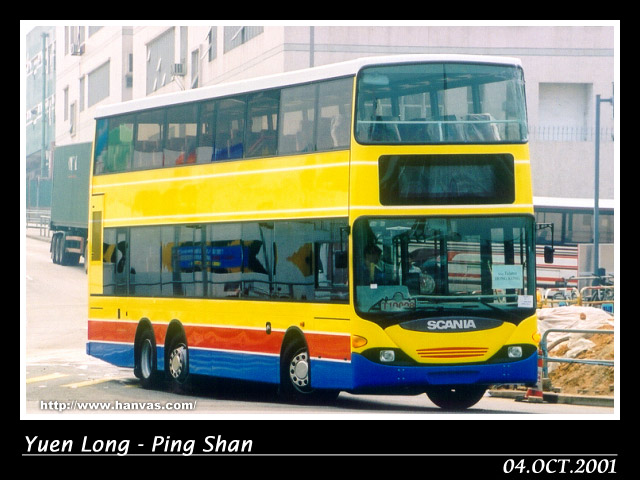 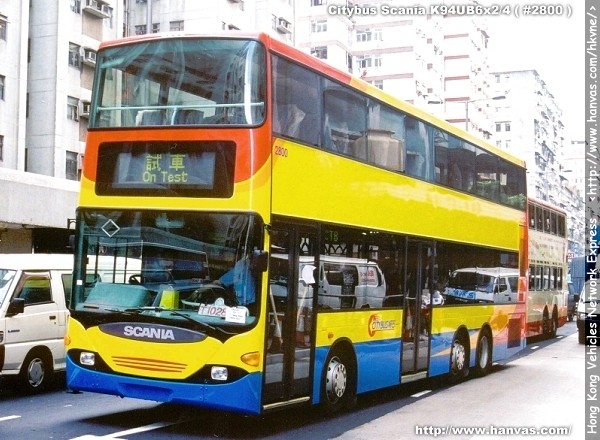 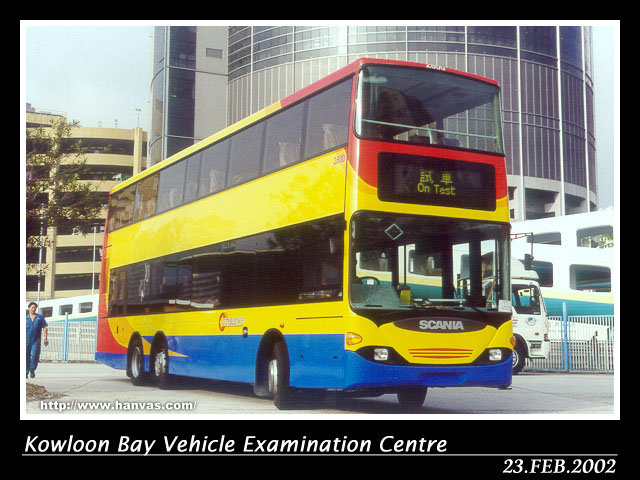 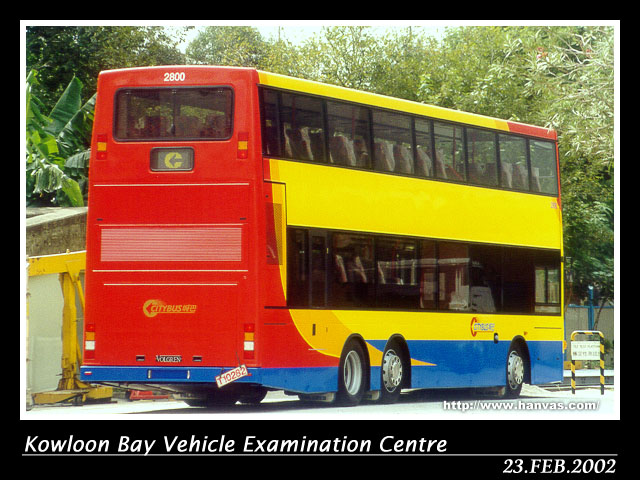 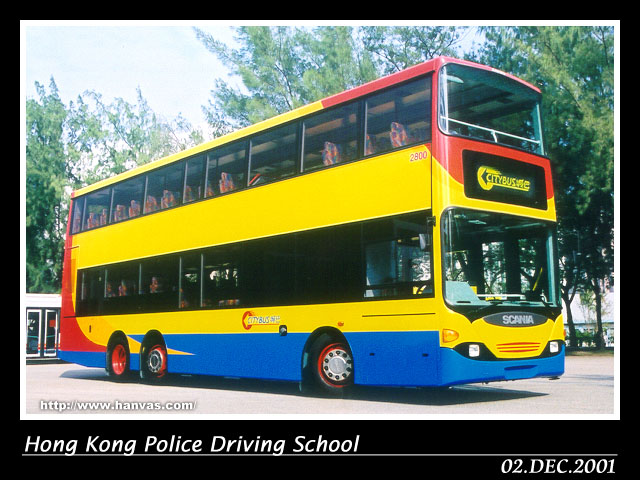 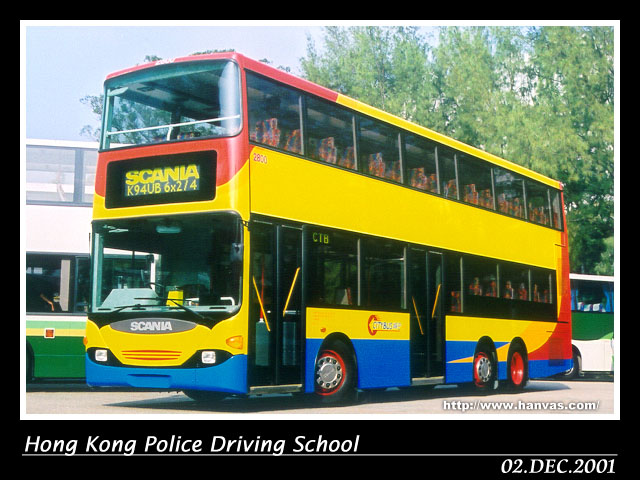 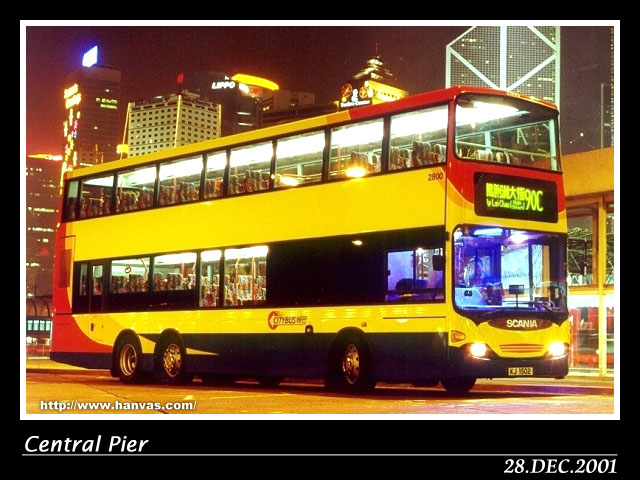 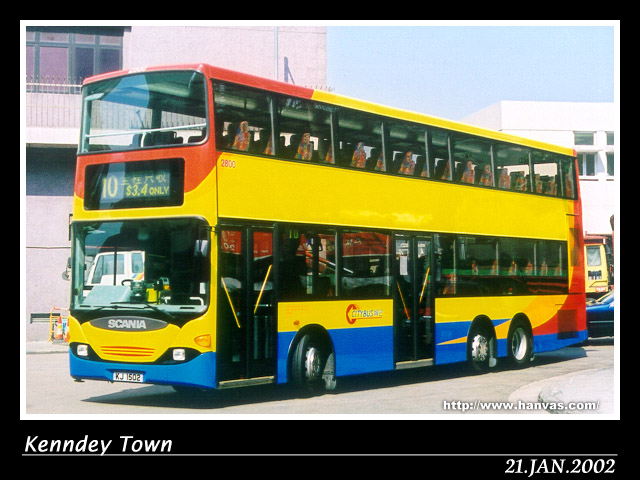 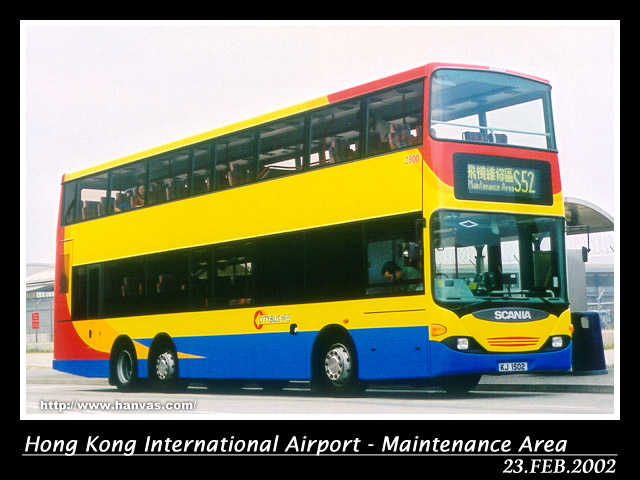 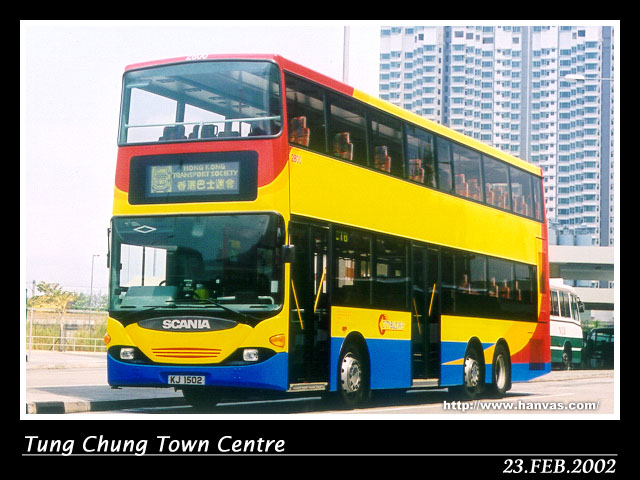 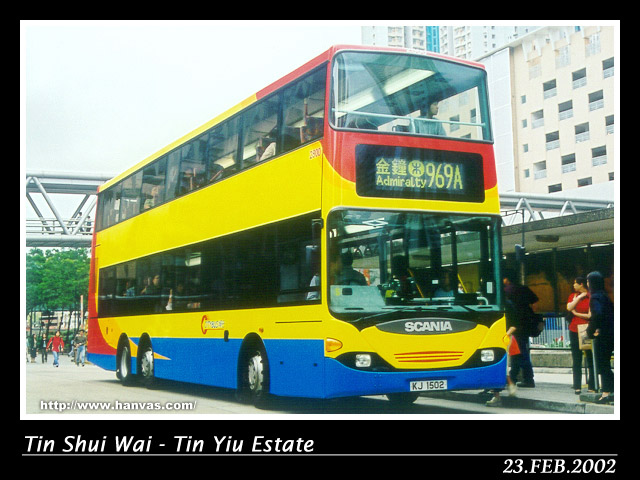
|